

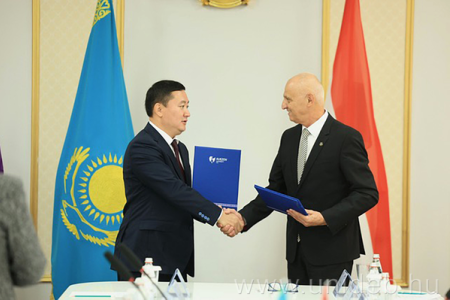
The representatives of the University of Debrecen and Mukhtar Auezov South Kazakhstan Research University have signed a declaration of intent for cooperation containing their joint goals in the launch of research projects, the development of double-degree courses and faculty and student mobility. The Hungarian signatory of the document prepared in the city of Shymkent was UD Rector's representative Károly Pető.
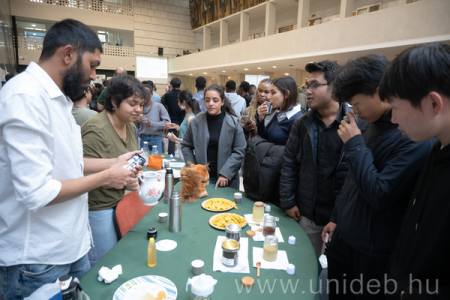
On Thursday, an Orientation Day was held at the Faculty of Agricultural and Food Sciences and Environmental Management of the University of Debrecen. The program was primarily designed to provide assistance to new students enrolled in English-language degree programs with settling in and managing their academic and administrative tasks. Furthermore, participants could try the soup called gulyásleves, make gingerbread, learn straw weaving and even furniture painting.
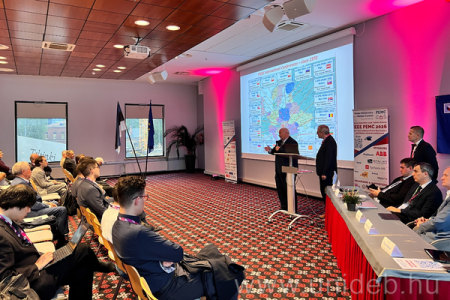
There were three representatives from the Faculty of Engineering of the University of Debrecen attending the jubilee conference of the Power Electronics and Motion Control Council, which was held in the capital of Estonia. The Tallinn event, hosted by the oldest and most prestigious international association in Europe dedicated to power electronics and motion control, attracted 230 participants from 40 different countries.
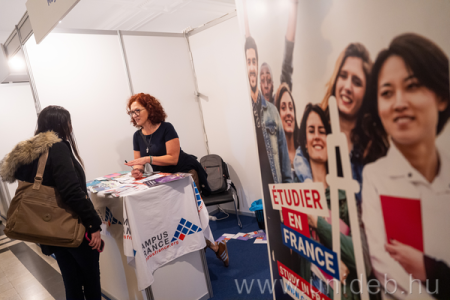
Once again, Erasmus+ programs are entirely available to students and researchers from the University of Debrecen, after the announcement of a decision by the Council of the European Union to end the conditionality procedure formerly implemented against Hungary. At the 28th annual International Opportunities Fair held in the Main Building of the University of Debrecen on Wednesday, participants could receive a comprehensive information package regarding the new features in the scholarship program, as well as about other mobility opportunities.
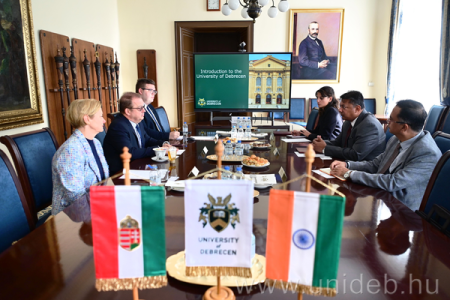
The University of Debrecen and India deepen on their existing relationship. During his visit in the University of Debrecen, Anshuman Gaur, Ambassador of the Republic of India to Hungary had a negotiation with Jenei Attila, Vice-Rector for International Affairs about the extension of the education, research and cultural projects. The diplomat gave a collection of books to the University and National Library of the University of Debrecen, and he opened there the India Corner, a thematic temporary book exhibition as well.
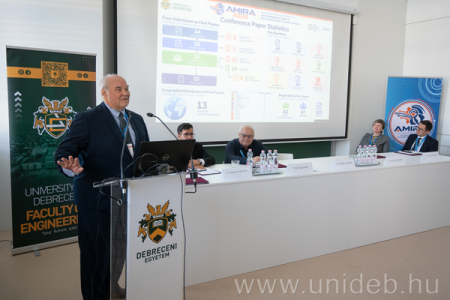
Internationally renowned researchers and industrial experts gave talks on the potential direction of technological progress and what sort of developments may transform our daily lives in the near future at the 2nd International Conference on Autonomous Machines and Intelligent Robotics Applications (AMIRA), which began on Tuesday at the Faculty of Engineering of the University of Debrecen. Several hundreds of attendees had the opportunity to listen to a total of twenty presentations.
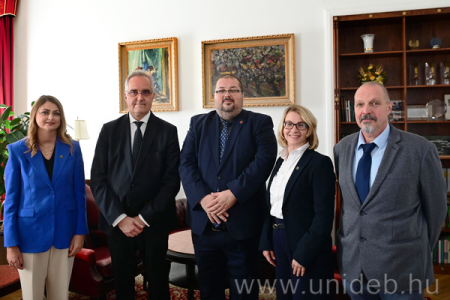
Poland’s consul stationed in Budapest personally expressed his appreciation and gratitude to the Clinical Centre of the University of Debrecen for the top-shelf expert medical care provided to the victims of the coach accident that had occurred on the M3 motorway in August. Marcin Bobiński noted that the Polish victims had received the highest standard of clinical care in Debrecen, which played a significant part in their speedy recovery. The consul was formally received by the leadership of the Clinical Centre in the Presidential Office on Tuesday.
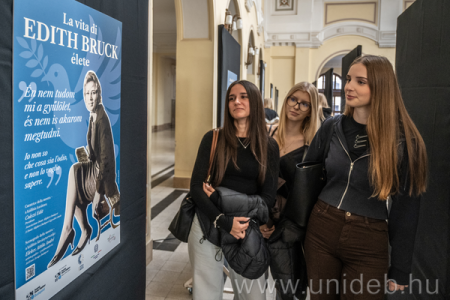
It was the University of Debrecen that hosted the Debrecen events of the Dante Festival, organized by the Dante Alighieri Society of Budapest and the Department of Italian Studies at the UD Faculty of Humanities. The festival program included an exhibition, a book launch and a conference for the attendees on Friday, October 9, in the Main Building of our university.
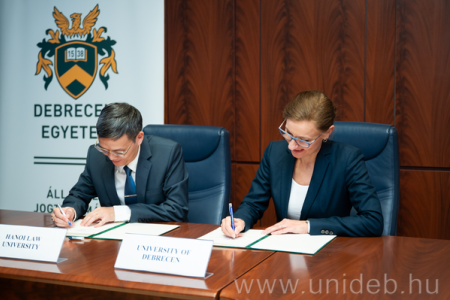
The Faculty of Law of the University of Debrecen and Hanoi Law University have concluded an agreement on academic cooperation. The pertaining document was signed by Dean Veronika Szikora and Vice-Rector Nguyen Ba Binh.
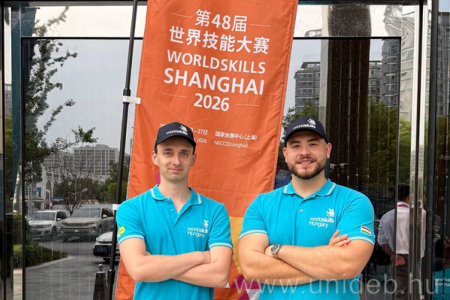
Two UD students from the Faculty of Engineering did exceptionally well at the WorldSkills international competition held in China. As representatives of Hungary in the industrial robotics category at this world championship of skills, Dániel Vígh and Károly Árpád Kis became the second-best team from Europe.
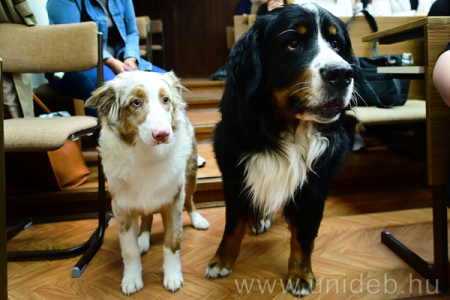
The limitations of artificial intelligence, a sustainable future, and new dimensions of human-animal relationships were among the topics discussed at the Faculty of Education for Children and Special Educational Needs at the University of Debrecen on October 6 and 7. Celebrating its fifth anniversary, the International Anthrozoology Conference hosted 71 speakers from Hungary and abroad this year, who shared their latest research findings across 14 different sessions covering almost every branch of the social and natural sciences.
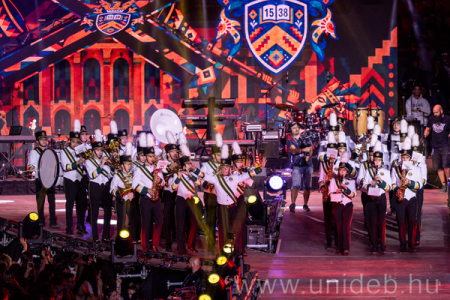
A truly memorable experience for the nearly 22,000 spectators at this year’s stadium show was entrée of the university’s wind ensemble. called Marching Band, as it made its way to the stage from the stands, marching around the arena floor. A similarly heartwarming moment of the night was the procession of more than a hundred international students carrying the flags of their respective countries. If you wish to recall the yoUDay experience, feel free to click on our videos!