
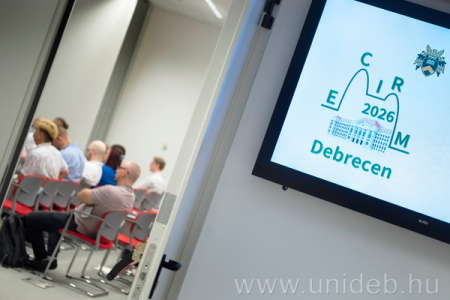
It is once again the University of Debrecen that hosted an international conference between September 6 and 9, dedicated to the precise understanding of inorganic chemical processes that are crucial to modern drug development, industrial catalysis and environmental protection technologies. At the most prestigious European forum for the study of inorganic reaction kinetics and mechanisms, the 7th ECIRM international conference, there were more than 60 researchers presenting their latest findings.
Hírek Natural science címkével
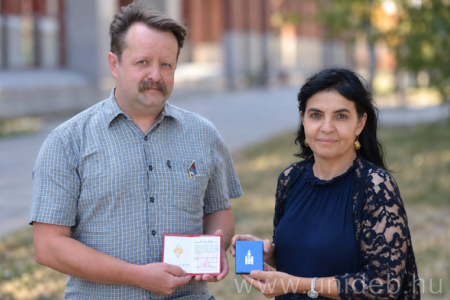
Gábor Sramkó, Assistant Professor at the Faculty of Science and Technology, has received unique international recognition. The Ministry of Education and Science of Mongolia honored him with a state award for his work in developing Mongolian-Hungarian bilateral relations and education in Mongolia. The biologist-researcher, who specializes on the genetic protection of endangered plant and animal species, received the highest professional recognition, awarded to foreigners only in exceptional cases.
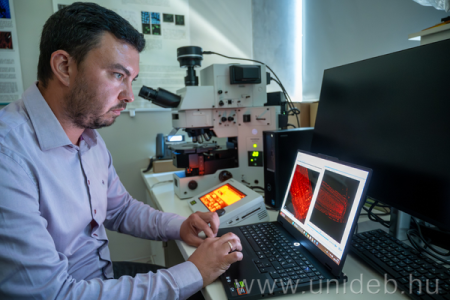
Even low concentration levels of toxins in apparently clean surface waters can be fatal to the plant kingdom, reveals one of the latest studies from the Department of Botany at the Faculty of Science and Technology (TTK) of the University of Debrecen. The study, published in the journal Environmental Pollution, presents at the cellular and molecular levels how toxic substances and herbicides in our environment damage the inner defense mechanisms of plant cells. These internationally significant findings have been recognized with the Count István Tisza Foundation for the University of Debrecen Publication Award.
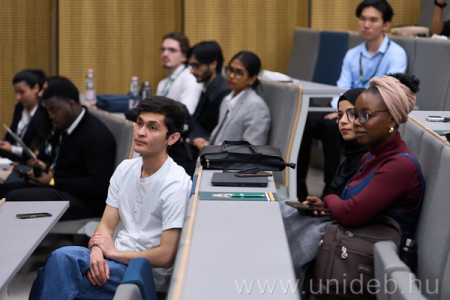
The now-traditional international student conference hosted by the Faculty of Science and Technology (TTK) at the University of Debrecen covered a wide range of exciting topics from drone wing technology to the urban heat island effect and nanotechnology. The event’s goal is to promote research and foster scientific collaboration among the faculty’s extremely diverse community, which brings together more than a hundred nationalities.
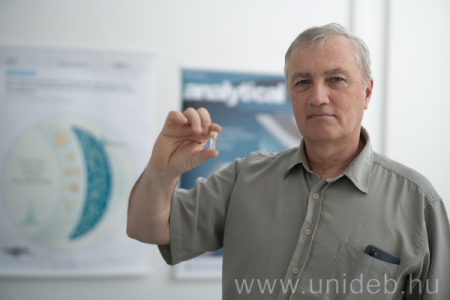
A new procedure developed by a research group at the Faculty of Science and Technology of the University of Debrecen (FST, UD) may open up new avenues and provide a roadmap for future mass spectrometry analyses. This new testing method significantly reduces the time and cost of mass spectrometry measurements of proteins both in the pharmaceutical industry and protein research. The publication that summarizes the scientific finding has appeared in one of the most prestigious international chemistry journals, Angewandte Chemie.

Two researchers from the Faculty of Science and Technology at the University of Debrecen (DE TTK) gave a presentation in Japan at the Hungarian Pavilion at Expo Osaka on their efforts to save the Hungarian birch mouse, now on the brink of extinction.

Hungarian and foreign researchers analyzed data from more than 2.6 million zoo births to find out whether it is truly random which gender is born more frequently among mammals and birds. The results show surprising distortions that could jeopardize the long-term success of species conservation programs. The research was published in the prestigious journal Scientific Reports.
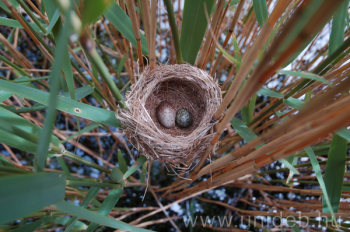
The nests of which host species are most often chosen by birds that leave the hatching and rearing of their offspring to others? This is the question that a researcher from the University of Debrecen sought to answer in the framework of an international collaboration using data collected about more than 6,000 bird species worldwide.

István Pócsi and Tamás Emri, professors from the Department of Molecular Biotechnology and Microbiology at the University of Debrecen, are ranked among the best in the world for their outstanding achievements in fungal stress biology. They research human, plant and insect pathogenic fungi as well as industrial microorganisms, while their research could also be relevant for industrial and pharmaceutical development.

The Faculty of Science and Technology of the University of Debrecen has hosted the first meeting of CubeSat developers. At the event, students from four institutions of higher education had the opportunity to learn about each other's ideas and the funding opportunities provided by the European Space Agency to help even more universities to launch their own satellites into space for scientific purposes in the future.