
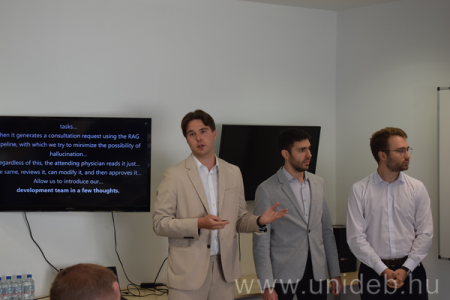
Innovative and multidisciplinary applications of artificial intelligence took center stage at the DEIK.AI Challenge 2026 student competition, organized by the Faculty of Informatics at the University of Debrecen with support from the Innovation Ecosystem Center. The finals of the first stage of this multi-stage competition—the AI Idea Competition—were held at the Faculty of Informatics.
Hírek Informatics címkével
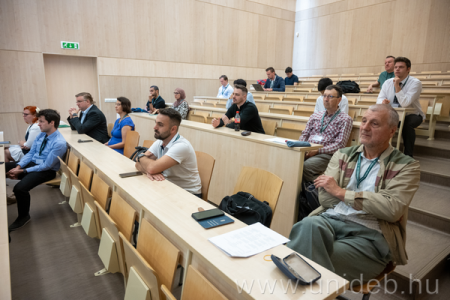
From to, to the application of AI, digital twins, and integrated modeling to climate and air quality protection, the Participants of a two-day CITDS Information Technology and Data Science Conference, hosted by the Faculty of Informatics of the University of Debrecen were able to get familiar with numerous IT innovations, including the challenges of autonomous driving, new paradigms of artificial intelligence and the application of AI, digital twins, and integrated modeling of climate and air quality protection. Once again, the central element of the event was the interaction of artificial intelligence and various technologies.
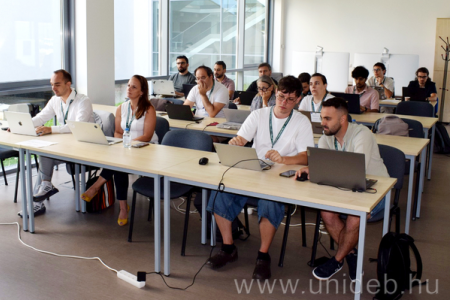
An international symposium was held at the Faculty of Informatics at the University of Debrecen on new trends in artificial intelligence, the innovative possibilities and challenges of the technology, and the significance of industry certifications and exam opportunities available in this field. At the AIDA AICET 2026 event, experts summarized, among other topics, the impact of machine learning, large language models, and agent-based systems on science.

The Faculty of Computer Science at the University of Debrecen is organizing a competition open to all students of the university with the aim of identifying student ideas and developments related to artificial intelligence, discovering talented teams, supporting students in gaining professional experience, and showcasing existing AI solutions. The competition, titled DEIK.AI Challenge 2026, is supported by the Innovation Ecosystem Center.
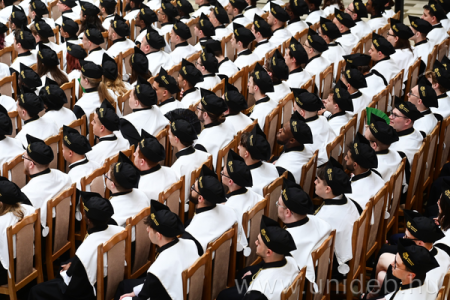
Altogether, a total of 350 Hungarian and international students earned their degrees at the Faculty of Informatics of the University of Debrecen in the spring semester. In an address delivered at the graduation ceremony on Thursday, Dean András Hajdu underlined that, in a world full of challenges and shaped by artificial intelligence, the knowledge that the young professionals who graduate from the faculty have obtained is going to be needed more than ever
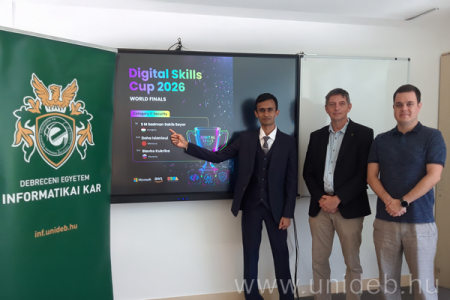
A talented student from the Faculty of Computer Science at the University of Debrecen won the world championship title in the IT security category at the Digital Skills Cup, a global online IT and technology competition for digital professionals. The senior student majoring in computer science and software engineering competed against regional champions from sixty-four countries and triumphed in a large and highly qualified field.
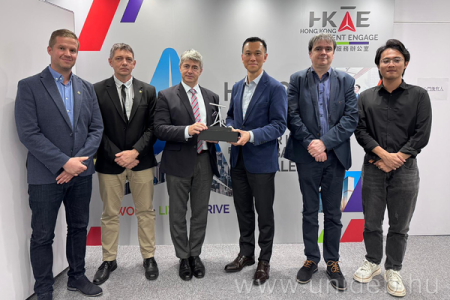
Researchers of the Faculty of Informatics at the University of Debrecen could find out about the most recent trends and developments in the fields of artificial intelligence, industrial digitalization, university-industry collaboration and startup ecosystems at the Chinese-Hungarian AIM (Artificial Intelligence Management) Summit held in Shenzhen, one of the most dynamically developing technology and innovation hubs in the People’s Republic of China. As a result of their recent visit, extensive professional cooperation may develop in the future between the Faculty of Informatics at the University of Debrecen and quite a few of the key actors in the Shenzhen-Hong Kong innovation and academic region.
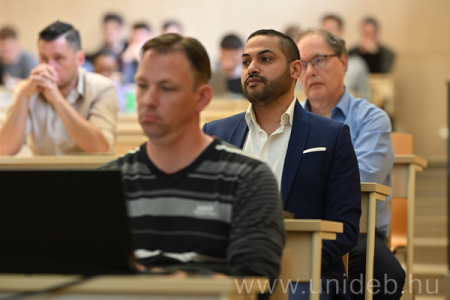
The current challenges and future directions of modern computer systems and network technologies were presented at the ISNODA 2026 international workshop held at the Faculty of Computer Science at the University of Debrecen. The event provided a comprehensive overview of how these technologies relate to the fields of artificial intelligence and data-driven operations, and how they contribute to the efficient functioning of modern digital systems.
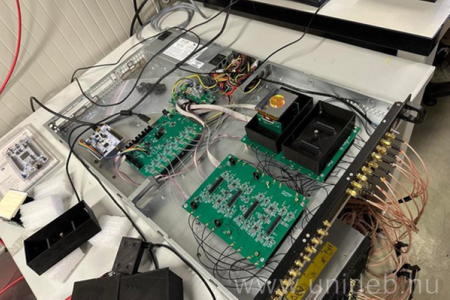
Through their basic research activity, researchers from the University of Debrecen and HUN-REN ATOMKI have contributed to the development of an innovative detector technology that could lead to significant advances, for example, in areas such as medical imaging systems. The researchers have reached the conclusion that the high-precision time-of-flight detector under scrutiny is equally suitable for use in large-scale physics experiments and in applications used by the general public.
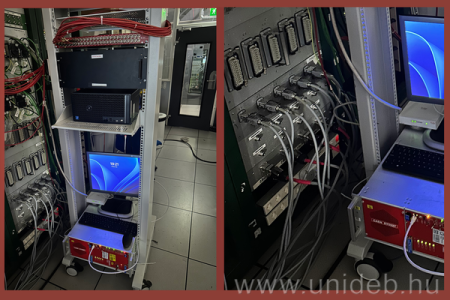
Researchers at the University of Debrecen, together with their colleagues at HUN-REN ATOMKI, have developed a new test system that aims to help examine the high-voltage power supplies of detectors used to observe new physical phenomena discovered by the Large Hadron Collider (LHC) at CERN. This new measuring device is capable of simulating up to ten times the load of current.