
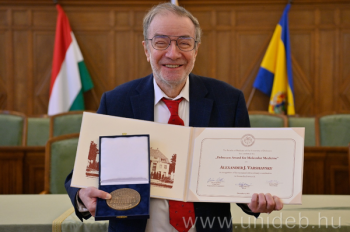
The Faculty of Medicine of the University of Debrecen has awarded molecular biologist Alexander Varshavsky the Debrecen Award for Molecular Medicine this year. Professor Varshavsky, who lives and works in the United States, owes his international fame chiefly to the discovery of protein degradation processes realized through the so-called ubiquitin system. This year’s awardee received the recognition on Tuesday at a ceremony held in the Aula [University Hall] venue of the Main Building, where he also delivered a lecture on his scientific achievements.
Hírek Faculty of Medicine címkével

With the graduation ceremony of the Faculty of Medicine coming first, a series of winter commencement ceremonies at the University of Debrecen will begin this weekend.
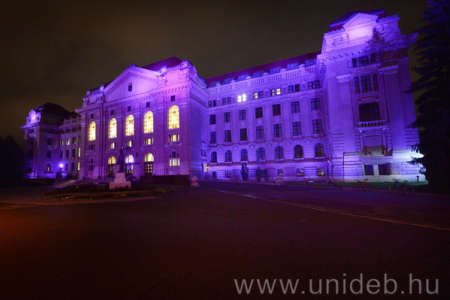
To mark the international day of premature babies, the Main Building of UD, the Clinical Centre, the Innovation Centre, the Stadium and the Water Tower were lit up in purple light on Thursday. The doctors and nurses who take care of premature babies also wore purple, the colour that symbolises hope and persistence. The goal of the initiative was to salute premature babies, their families, and healthcare professionals who take care of them.
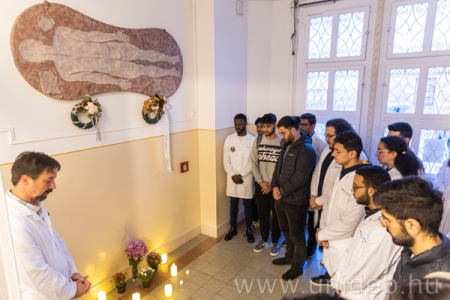
Those who had offered their bodies for educational and research purposes were commemorated at the Department of Anatomy, Histology and Embryology of UD on Friday. Teachers and Students expressed their gratitude and respect together.
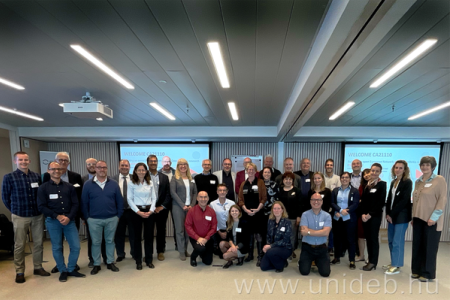
Two researchers from UD have been involved in an international initiative (COST), which aims to improve the quality of life of patients who suffer from osteoarthritis by coordinating European research programmes and speeding up the implementation of technological developments and research results into clinical practice. Researchers from 23 countries participate in the four-year-long programme.
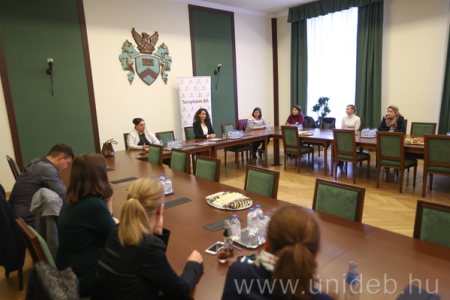
Researchers of UD have developed a technology that allows the manufacturing of a new dietary supplement by extracting antocianin from sour cherry. The consortium comprised of the university and Sorapharm Ltd. received an EU grant of over HUF 1.5 billion for the project. The dietary supplement developed in the framework of the project has been registered by the National Institute of Pharmacy and Nutrition. The results of the project were reported at UD on Thursday.
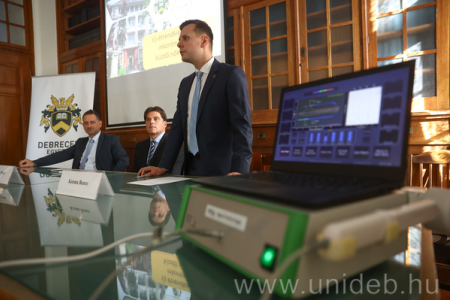
Together with the researchers of a partner company, the Department of Gynaecology and Obstetrics of the Clinical Centre, UD, have developed a dietary supplement that may help women who live with incontinence. Combined with physical exercise, the product strengthens pelvic muscles. The dietary supplement was tested at the Clinic, the results were reported on Wednesday.
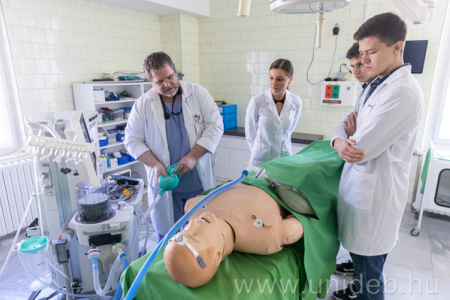
Hungary is the first country in Europe where a national skill lab network has been established. At the universities of Debrecen, Pécs and Szeged, and 16 county hospitals medical students can practice diagnostical, therapeutic and life-saving interventions using state-of-the-art equipment, in a real-life environment. Representatives of the institutions involved in the 13 billion HUF project discussed the experience obtained so far at UD on Thursday.
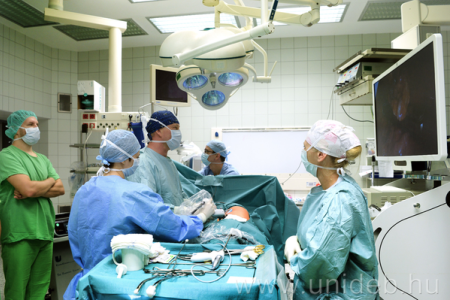
The European Society of Thoracic Surgeons gave the Thoracic Surgery Department of the Clinical Centre of UD the title of most reliable partner. The head of the Centre received the certificate a few days ago.
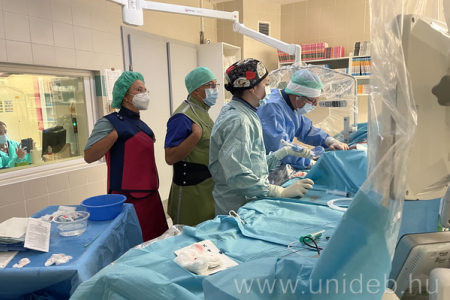
The first two orbital atherectomies in severe calcified coronary artery stenosis have been performed at the Department of Cardiology and Cardiac Surgery of the Clinical Center of the University of Debrecen. Using the procedure, the hard calcareous deposit formed in the coronary artery can be effectively removed, the narrowing can be successfully dilated and stented. In Hungary, the method is considered a novelty at this point.