


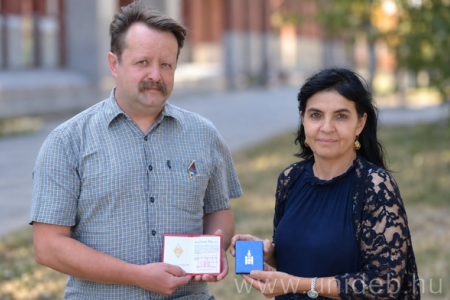
Gábor Sramkó, Assistant Professor at the Faculty of Science and Technology, has received unique international recognition. The Ministry of Education and Science of Mongolia honored him with a state award for his work in developing Mongolian-Hungarian bilateral relations and education in Mongolia. The biologist-researcher, who specializes on the genetic protection of endangered plant and animal species, received the highest professional recognition, awarded to foreigners only in exceptional cases.
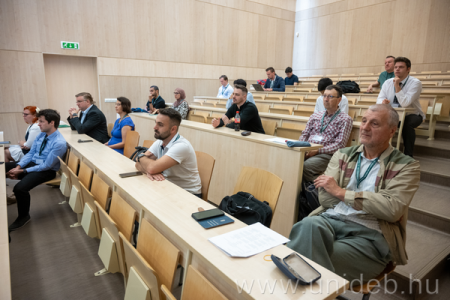
From to, to the application of AI, digital twins, and integrated modeling to climate and air quality protection, the Participants of a two-day CITDS Information Technology and Data Science Conference, hosted by the Faculty of Informatics of the University of Debrecen were able to get familiar with numerous IT innovations, including the challenges of autonomous driving, new paradigms of artificial intelligence and the application of AI, digital twins, and integrated modeling of climate and air quality protection. Once again, the central element of the event was the interaction of artificial intelligence and various technologies.
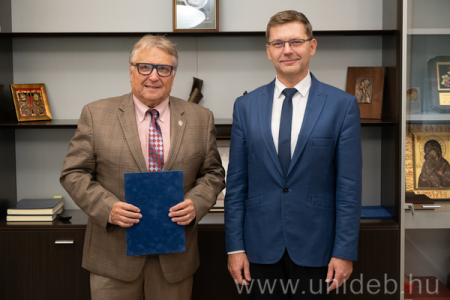
Professor László Nagy will serve as an advisor to the dean at the University of Debrecen’s Faculty of General Medicine, helping to strengthen academic and international relations, with a particular focus on expanding collaborations in North America, developing opportunities for study abroad, and nurturing talent. In addition to his work at the University of Debrecen, László Nagy works at the Florida campus of Johns Hopkins University and is a researcher with extensive domestic and international connections.
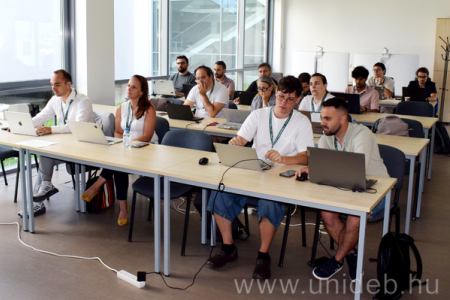
An international symposium was held at the Faculty of Informatics at the University of Debrecen on new trends in artificial intelligence, the innovative possibilities and challenges of the technology, and the significance of industry certifications and exam opportunities available in this field. At the AIDA AICET 2026 event, experts summarized, among other topics, the impact of machine learning, large language models, and agent-based systems on science.
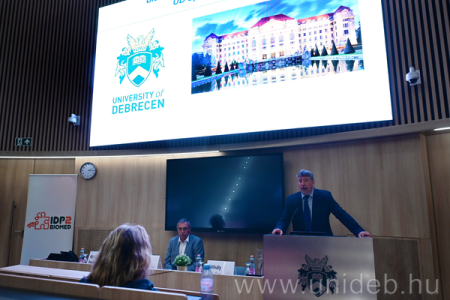
In 2026, the University of Debrecen hosted the annual meeting of the Hungarian Biochemical Society, which will be held in conjunction with an international conference. The event is the most prestigious domestic forum in the field of biochemistry, featuring scientific presentations and professional discussions, and two faculty members from the university will also receive prestigious professional recognition. The three-day conference opened on Wednesday, August 26, at the Learning Center.
A more thorough recognition and understanding of the various cell types in cartilage may lead to the development of new therapeutic options for the treatment of osteoarthritis. The latest research findings on this topic have been analyzed and synthesized by Csaba Matta, a researcher at the University of Debrecen, and his co-authors. His review article is now published in Nature Reviews Rheumatology, one of the leading journals of the field. The scientific achievements of his work have also been recognized by earning a Publication Award from the University of Debrecen and the Count István Tisza Foundation for the University of Debrecen.
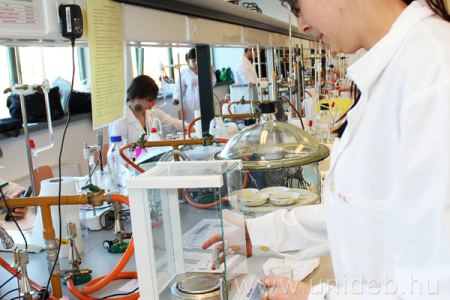
Researchers at the Faculty of Engineering of the University of Debrecen have investigated a physico-chemical treatment method for so-called bathroom greywater (BGW). This is water that has already been used once in the bathroom (gently) but can be reused for certain non-potable purposes after treatment. The findings were published in the journal Results in Engineering. This article has also been honored with a Count István Tisza Foundation for the University of Debrecen and the University of Debrecen Publication Award.
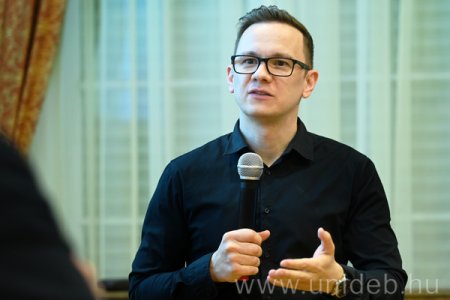
Bertalan Meskó is a “medical futurist” who believes that practical methods of futures studies, like foresight and scenario analysis, should play a greater part in scientific decision-making. In his view, the examination of possible futures and risks could turn out to be helpful in planning research programs more flexibly and in making well-informed decisions concerning research funding. Together with his co-authors, he has published his proposals related to this topic in Nature, one of the most prestigious scientific journals in the world. Meanwhile, Bertalan Meskó is already busy establishing a workshop at the University of Debrecen focused specifically on medical futures studies.

A research team at the Faculty of Health Sciences of the University of Debrecen has explored the connection between periodontal disease, as a risk factor for neurodegenerative diseases (NDDs), and its possible inflammatory, microbial and genetic background. The research team members concluded that periodontitis is normally associated with a heightened risk of developing later neuro-degenerative diseases, even after having been accounted for cardiovascular, cerebrovascular, metabolic and inflammatory comorbidities.
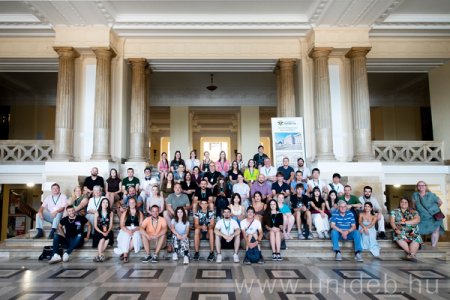
The 2026 course of Debrecen Summer School has come to an end, and a total of 116 certificates have been awarded by the organizers to the participants, half of whom studied Hungarian for the entire length of four weeks, while the other half took turns in staying for either the first or the second two weeks of the course. As all of them passed the final exam successfully, these language learners were satisfied and happy without exception when they returned home on August 15.
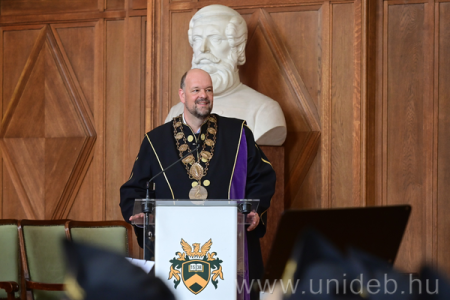
Péter Lakatos will retain his position as Dean of the Faculty of Music at the University of Debrecen. According to the dean, who has been at the helm for the past seven years, the Debrecen institution covers the broadest spectrum of higher education in music at present, but expansion and development continue to remain primary goals at the Faculty of Music of the University of Debrecen (DE ZK). Péter Lakatos, who has just been re-elected for another five years, regards it an important task to make studying music both for Hungarian and international students at our university even more attractive than it currently happens to be, while making sure that the Faculty of Music should continue to be ranked among the best institutions.
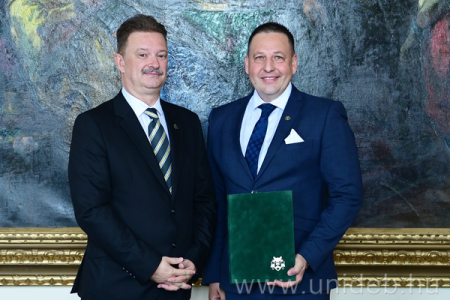
Endre Harsányi aims to enhance the innovation activities at the University of Debrecen through building on the multidisciplinary knowledge base of our institution and linking the healthcare industry, agriculture, the automotive industry, robotics, artificial intelligence and other strategic areas. The vice rector responsible for sectoral development reckons that the overall objective is to establish an integrated development system that facilitates closer cooperation among the various faculties, research centers and industrial partners of the university, while increasing the practical application possibilities of research findings and enhancing our international competitiveness at the same time.