
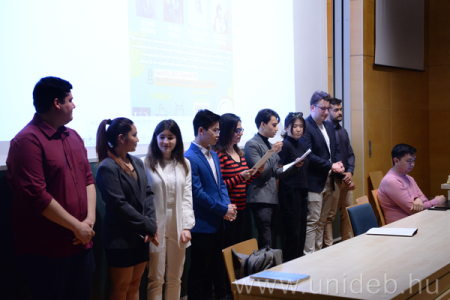
Students who are currently enrolled in the English-language programs offered by the Faculty of Science and Technology (FST) were given presentations at an event organized by the International Student Union (ISU) on the academic work conducted at the FST, the possibilities for getting involved in TDK (Student Scientific Conference) and on the talent management programs conducted by the university.
Hírek Research címkével
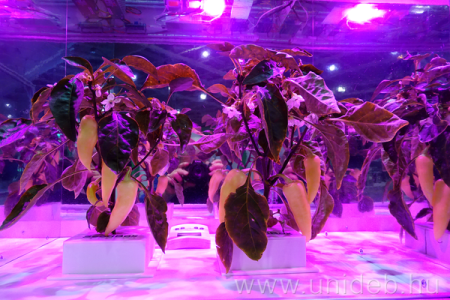
“Space peppers” grown by the University of Debrecen (UD) in the space capsule Capsitron, on display at the exhibition Álmok Álmodói 20, have been harvested recently. The closed crop production ecosystem used in the research project DE SPACE has indeed produced delectable and crunchy vegetables. In fact, experts from UD participating in the project have studied several pepper species with the aim of selecting the ones that promised the largest yield in the smallest area with zero emission.
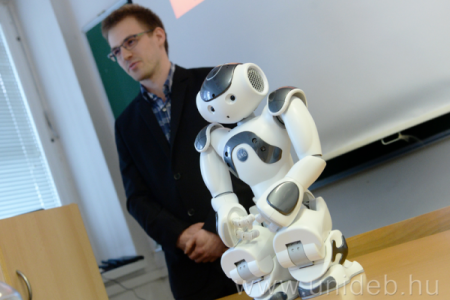
The entries that had made it to the final of the students’ competition on the subject of the psychological aspects of human-robot interactions were exhibited and awarded at the Department of Psychology of the University of Debrecen on Thursday. The programme was also a contribution of the Faculty of Humanities to the university’s Neurotech project.
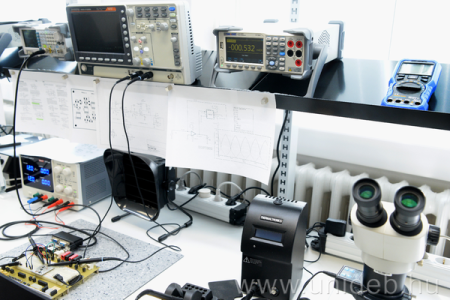
A world-class electronic manufacturing technology laboratory has been set up at the Faculty of Science and Technology of the University of Debrecen. The laboratory installed at the Department of Electrical Engineering through a cooperation between UD and its partner companies offers an industrial environment where students can become familiar with cutting-edge manufacturing technologies.
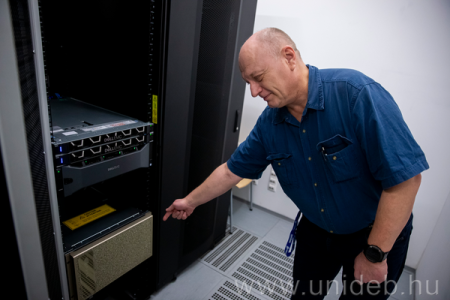
The new software in the equipment pool of the Faculty of Informatics at the University of Debrecen is routinely used in research and development related to autonomous vehicles and artificial intelligence. The special piece of equipment inaugurated on Thursday will assist the vehicle research activities of the institution, which are of strategic significance.
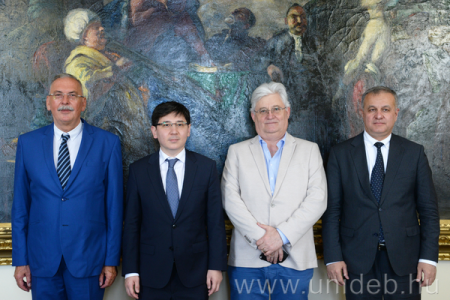
The University of Debrecen is further strengthening its cooperation based on knowledge transfer with Uzbekistan. Rector Zoltán Szilvássy, held talks with Ambassador Abat Fayzullaev on education and R&D cooperation in the fields of pharmaceutical science and industry, as well as agricultural science.
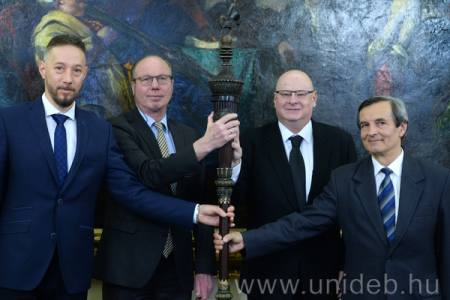
Mr. Gunnar Saeter, professor of the Center for Comprehensive Oncology at the University Clinic of Oslo (N), and a member of the Scientific and Social Advisory Board (TTTT), which assists the work of the Chairperson of the Board of the Count István Tisza Foundation for the University of Debrecen, visited the University on Friday. The Norwegian professor gave a presentation on some new opportunities in cancer research.
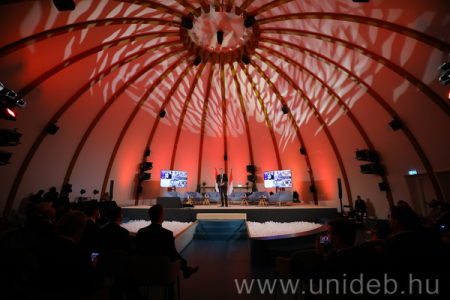
Visitors of the Puskás Day, organised at the Hungarian Pavilion of the Dubai World Expo, were able to familiarize themselves with the innovative sports strategy and sports infrastructural and sport economic developments of the University of Debrecen, and with the organisational structure, operational model and achievements of DEAC.
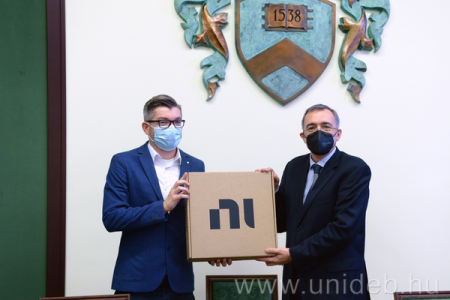
NI (National Instruments) has provided yet another donation for the engineering, science and technology programs offered at the University of Debrecen. At the official donation ceremony held on Wednesday, the Faculty of Engineering received HUF 4 million worth of technological support, while the share of the Faculty of Science and Technology of the same was HUF 7.4 million.
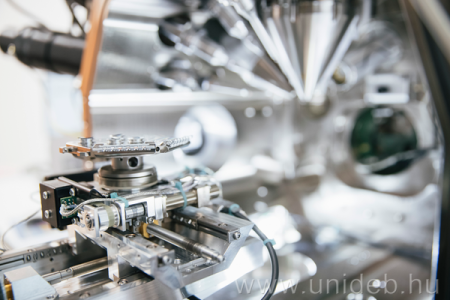
State-of-the-art facilities and equipment are available for a variety of materials science examinations, structural analysis and the production of samples in Debreceni Egyetem – Atommagkutató Intézet Anyagtudományi Kutatóhálózat [Materials Science Research Network of the Institute for Nuclear Research and the University of Debrecen]. The National Research, Development and Innovation Office has recently awarded the title “Top 50 Kutatási Infrastruktúra” [Top 50 Research Infrastructure] to this unique network of laboratories.