
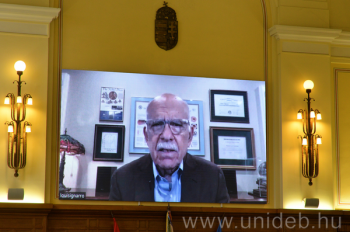
This is the time when the University of Debrecen can become one of the leading higher education institutions in the CEE region in the fields of science, education and innovation – pointed out Louis J. Ignarro, Nobel-laurate pharmacologist at the founding event of the Scientific and Social Advisory Body in the Hall of UD.
Hírek Research címkével
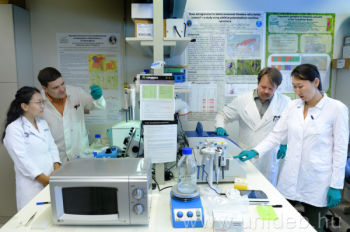
Two Mongolian biologists are conducting evolutionary genetic research at the Faculty of Science and Technology (TTK) of the University of Debrecen through a mobility grant of the Hungarian Academy of Sciences. As part of the joint Hungarian-Mongolian research, specialists from Debrecen have also visited Mongolia on a study trip, studying kestrels and peregrine falcons, and have given bioinformatics training to their colleagues in Ulaanbaatar.
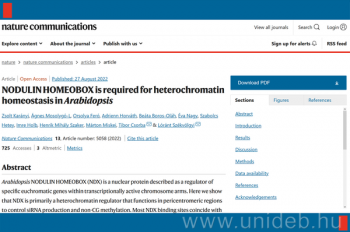
The researchers of the University of Debrecen have achieved world-famous results in the study of chromosome-forming chromatin. The research group managed to show that the protein NODULIN HOMEOBOX (NDX) regulates heterochromatin, which is depleted in genes and is functionally inactive. Their high-impact publication presenting the research appeared in Nature Communications, one of the most prestigious scientific journals.

The first piece of equipment prepared by the University of Debrecen to be used in space has been completed, and it is scheduled to go into outer space at the beginning of next year. This unique instrument will measure radiation that affects technical equipment in the cosmic environment. The innovation created by DE SPACE’s Radiation Physics Research Group was presented at a workshop held in the Borsay Castle of our Mád Campus.
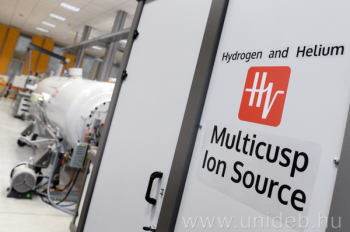
On the ESA Day held at ATOMKI on Thursday, European Space Agency (ESA) staff members could take a look at the relevant instrument park of the University of Debrecen and the Nuclear Research Institute of Eötvös Loránd Kutatási Hálózat [Eötvös Loránd Research Network] as well as learn about the investigations related to space research conducted here. Hungary’s Ministerial Commissioner for Space Research Ms. Orsolya Ferencz also participated in the event.
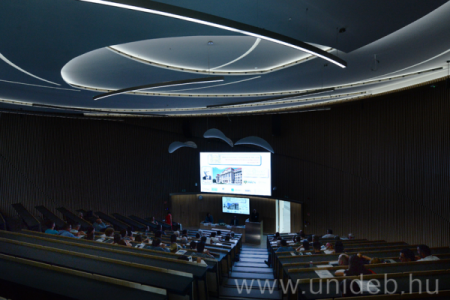
A conference on the chemistry and biology of carbohydrates has been hosted at the University of Debrecen. About 100 professionals from as many as 15 European countries and the USA, as well as from Hungary, were expected to participate in the three-day English-language conference that was launched on Wednesday in the Learning Center.
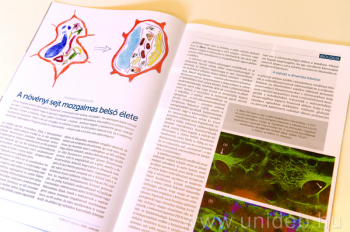
Investigations by Plant Cell and Developmental Biology Research Group at the University of Debrecen can also help breed plants that are resistant to drought and severe weather. The latest research findings are also presented in a textbook edited by the Head of the Research Group, Csaba Máthé. A doctoral student from the research group, Csongor Freytag, has won a major professional award for his article in which he presented the results of the investigation.
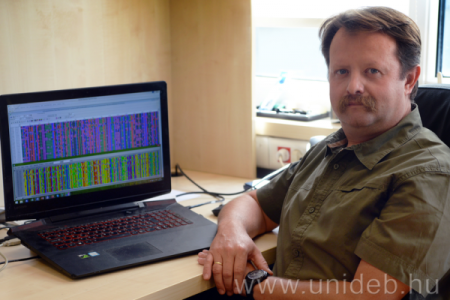
An article has been published first in a prestigious British scientific journal about the computer software developed at the Faculty of Science and Technology of the University of Debrecen, which can efficiently facilitate certain evolutionary genomics research efforts.
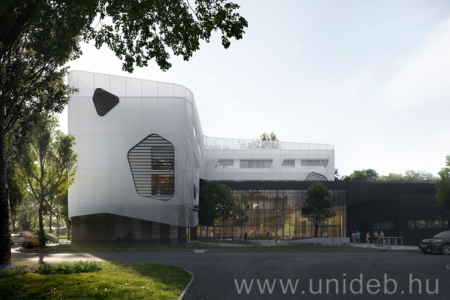
The new building of the Faculty of Pharmacy of UD will serve as a facility for low-volume manufacturing of medicinal products, medical food and dietary supplements, in addition to education and research. Designed by the Pyxis Nautica Architect Studio, the National Manufacturing, Research and Educational Facility will be constructed in 2023.
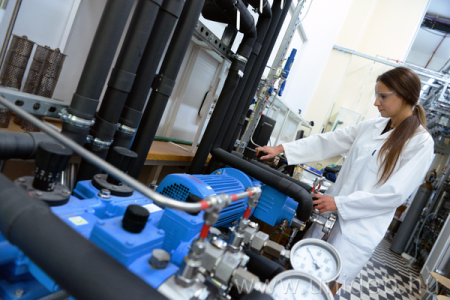
Researchers of the Faculty of Science and Technology of UD are involved in a space technology project in the framework of the "EU HORIZON" grant. The engineers participating in the project develop and manufacture polymer aerogels for heat insulation. The project will be launched in November with a total budget of EUR 3 million. The Department of Inorganic and Analytical Chemistry has conducted research into aerogels for 17 years.