
The University of Debrecen is still listed among the best 40 higher education institutions in the Eastern Europe and Central Asia Region ranking of the QS World University Rankings. In addition, UD has jumped to place 204th in the Green Metric sustainability ranking.
Hírek Science címkével
The University of Debrecen has been ranked 25th in the Eastern European thematic rankings of the SCImago Institutions Rankings. In the field of energy, UD has outperformed prestigious institutions such as the Lomonosov Moscow State University (Russia), the Jagiellonian University (Poland), and Charles University (Czech Republic).
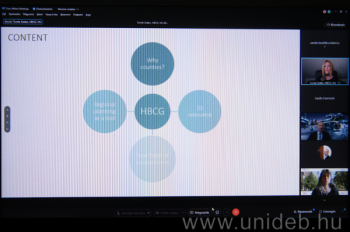
Partners of the University of Debrecen are to present their research projects planned for the next seven-year economic cycle of the European Union and their possibilities for cooperation at the 2021 conference of the university network of applied sciences hosted in Debrecen between October 27 and 29
Deputy Rector Elek Bartha represented the University of Debrecen at a meeting organized for the leaders of the universities participating in the NeurotechEU project in early October in Germany. The initiative was also joined by the European campus of an American institution.
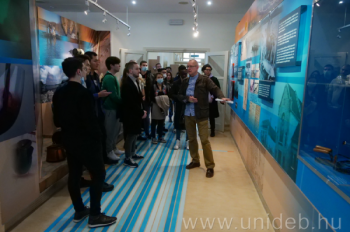
Students of the UD, who took part in the nuclear energy competition, known as Hackatom organised by Rosatom Central-Europe, Paks Nuclear Power Plant Ltd. along with Paks II. Ltd, this spring, had the chance to get acquainted with Unit 4 of Paks Nuclear Power Plant on the spot.
CARPE, the travelling conference of the UD will be organised between 27th and 29th October. At the international congress, research planned for the next seven-year economic cycle of the EU will be presented by the university partners.
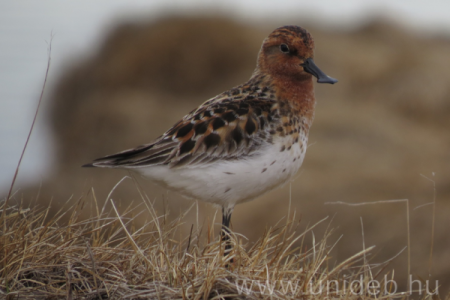
Migration is a risky business, and a recent study lead by scientists at University of Debrecen (Hungary) suggests that migration will be even riskier in future. The article published in Trends in Ecology & Evolution, a leading international outlet in biodiversity and conservation.
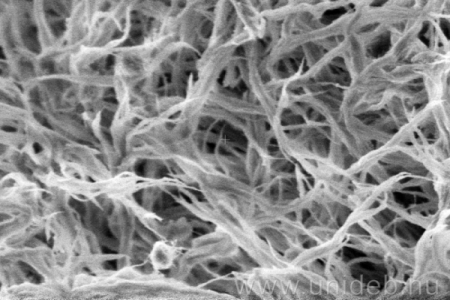
Using a recent innovation discovered by chemists at the University of Debrecen, it is possible to remove toxic aqueous mercury pollution from the environment without endangering wildlife or other living organisms. The publication on special aerogels appeared in Chemosphere.
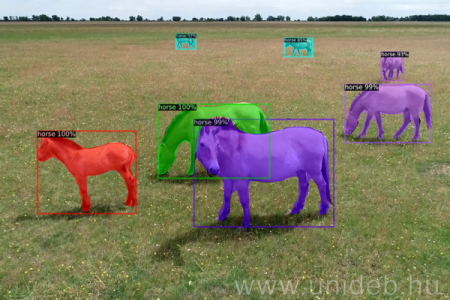
In the area of Hortobágy, artificial intelligence is used for saving the endangered Asian wild horses. Researchers from the UD apply drones to examine the way of life of Przewalski’s horses living on the premises of Hortobágy National Park. The data received then processed with Microsoft’s Azure.
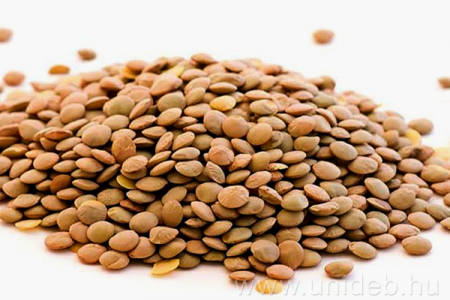
The full genomic sequence of lentil is currently explored with the help of a supercomputer at the UD by the researchers of Centre for Agricultural Genomics and Biotechnology. This research has been selected as one of the ten most interesting projects of Governmental Agency for IT Development.