

Together with its partners, Innovációs Ökoszisztéma Központ [Innovation Ecosystem Centre], of the University of Debrecen is to issue a call for participants in two student idea competitions during the month of May. The central topics of these competitions will be Campus Fesztivál and the innovative use of artificial intelligence.
Hírek Innovation címkével

The Department of Surgery of the University of Debrecen Clinical Centre organized a symposium entitled Robotic Surgery for Everyone (Robotsebészet mindenkinek) on the experiences gained since the launch of the Robotic Surgery Centre last April. The event, held at the Headquarters of the Debrecen Regional Committee of the Hungarian Academy of Sciences (DAB), was dedicated to a discussion of the place, role and results of robot-assisted surgery in clinical practice in Debrecen, including an overview of the particularities of each medical specialty.
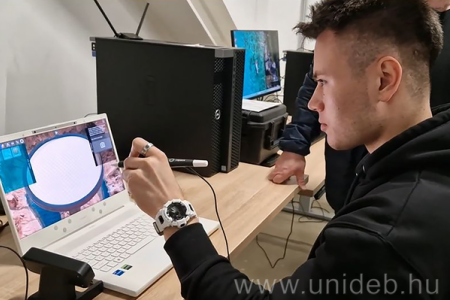
In the ImpactLab-Makerspace laboratory of Innovációs Ökoszisztéma Központ [Innovation Ecosystem Center], students can expect to be exposed to 3D technologies week after week this semester as well: in addition to taking the four courses announced, these young people can also start their prototyping journey in specific workshops.
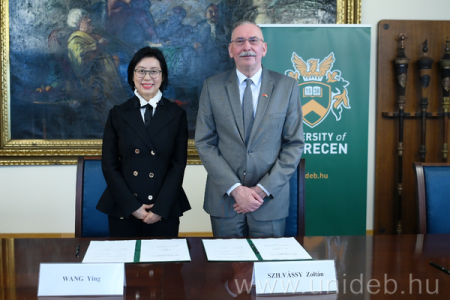
The University of Debrecen and the company Beijing LINEMILES Technology are to launch a cooperation project in order to promote Sino-Hungarian technological innovation and the development of the start-up and spin-off ecosystem of the University of Debrecen. The relevant strategic partnership agreement was signed at the University of Debrecen on Monday.

How can a woman become a successful leader? Is there a career and/or motherhood dilemma? What are the drawbacks of young people communicating today mostly in the digital space? These were some of the issues discussed recently at MÜZLI Pódium, while at another event of Debreceni Egyetem Mérnöki és Üzletfejlesztési Innovációs Intézet [Institute for Engineering and Business Development Innovation at the University of Debrecen], the Alumni Party, students could ask questions freely addressed at the master teachers in our Learning Center.
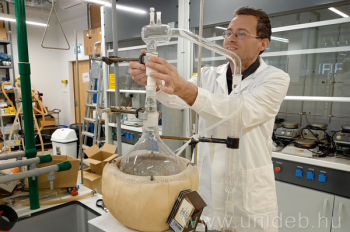
Novel drug candidate compounds, which are currently unique in the world and likely to be effective in the treatment of malaria, have been produced at the Faculty of Pharmacy of the University of Debrecen. The outstanding achievement of the researchers involved has been recognized by a publication award by Gróf Tisza István Debreceni Egyetemért Alapítvány [Count István Tisza Foundation for the University of Debrecen].
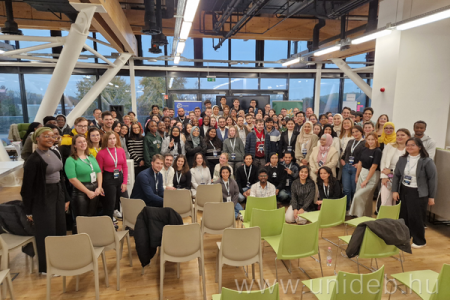
Hosted jointly by the University of Debrecen and EIT Health Innostars, a two-day innovation competition kept our institution vibrant on November 11 and 12. There were almost 150 students from 6 universities in 41 countries entering the 24-hour health-focused competition. The students were supported by renowned international mentors to develop their ideas. At the same time, researchers of our institution had the opportunity to learn more about how to turn an academic idea into a successful business venture in an inspiring conference with the help of the White Unicorn incubator.
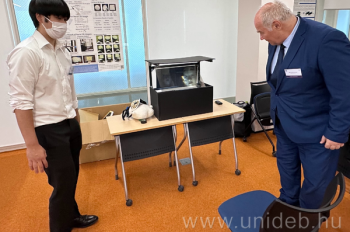
Three faculties, the Faculty of Engineering, the Faculty of Informatics and the Faculty of Humanities, of the University of Debrecen were represented at a conference called CogInfoCom (Cognitive infocommunications) at Chuo University, Japan, which was attended by academics from universities located on several continents. This event primarily focused on the potential of merging human and digital environments, artificial intelligence, info-communication and cognitive skills.

Electromobility and sustainability will be the central themes of the conference and professional forum organised by the University of Debrecen at this year's Debrecen Drive. The country's largest automotive event will feature more professional events than ever before, with more than 800 different vehicles, oldtimers and premium top-of-the-range cars and a spectacular night drive show in the area of the Nagyerdei Stadium for three days from 24 May.
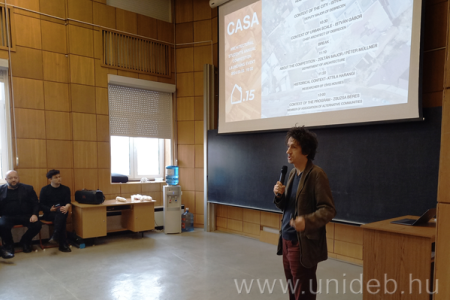
The opening event of CASA 15, an international design competition for students of architecture, was held this year at the Faculty of Technology of the University of Debrecen. The participants, around two hundred second-year students of architecture from three different countries, were instructed to design a residential building with community functions located on a specific site in Debrecen. The host institution, the Department of Architecture of the University of Debrecen, was represented by as many as sixty students partaking in the competition.