
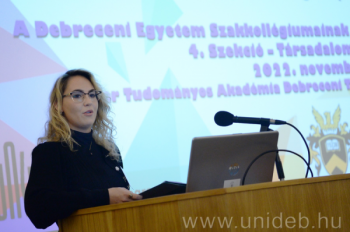
The University of Debrecen has recently organized the scholarly-scientific conference of its colleges for advanced studies for the fourth time. At the event held in Debrecen Academic Committee Headquarters on Tuesday, students from seven disciplines gave account of their latest findings in as many as five different sections. The speakers delivering English and Hungarian presentations represented the colleges for advanced studies active in our institution and at Partium Christian University.
Hírek Science címkével
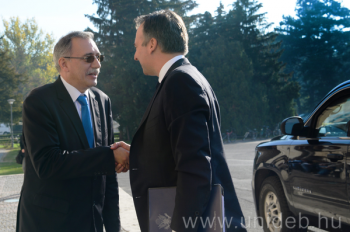
During his visit to Debrecen, David Pressman, the new US ambassador to Hungary was informed about the space research programme of the University of Debrecen. Ambassador Pressman was welcomed by László Csernoch, vice rector for scientific affairs.

A recent issue of the prestigious international scientific journal, Biological Reviews, contains a paper highlighting a research project conducted at the Faculty of Science and Technology (FST) of the University of Debrecen that explores the reasons for the formation and long-term survival of forest-steppes.
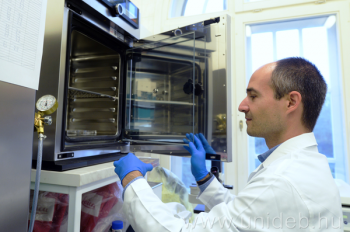
Researchers at the University of Debrecen were the first to describe how mechanical stimuli have an effect of enhancing cartilage formation by synchronizing the biological clock of the developing chondrogenic cells. Their findings may contribute to the development of new and more efficient treatments of arthritis and arthrosis, through which better quality cartilage replacement can be achieved. The study that summarizes the relevant research process was recently published in one of the most prestigious international scientific journals.
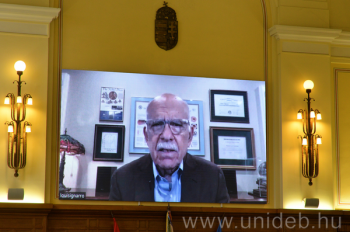
This is the time when the University of Debrecen can become one of the leading higher education institutions in the CEE region in the fields of science, education and innovation – pointed out Louis J. Ignarro, Nobel-laurate pharmacologist at the founding event of the Scientific and Social Advisory Body in the Hall of UD.
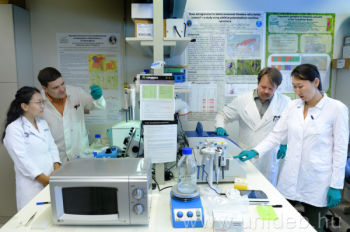
Two Mongolian biologists are conducting evolutionary genetic research at the Faculty of Science and Technology (TTK) of the University of Debrecen through a mobility grant of the Hungarian Academy of Sciences. As part of the joint Hungarian-Mongolian research, specialists from Debrecen have also visited Mongolia on a study trip, studying kestrels and peregrine falcons, and have given bioinformatics training to their colleagues in Ulaanbaatar.
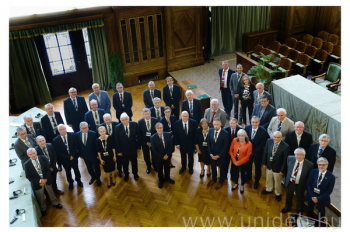
A Tudományos és Társadalmi Tanácsadó Testület [Scientific and Social Advisory Board] of fifty-seven members supporting the work of the Chairman of the Board of Trustees of Count István Tisza Foundation for the University of Debrecen (GTIDEA), which operates and maintains the University of Debrecen, has been established. At the inaugural meeting on Wednesday, the dignitaries from Hungary and abroad making up the board introduced themselves and received their credentials at the same time.
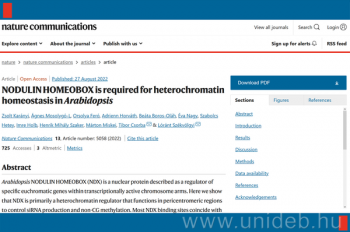
The researchers of the University of Debrecen have achieved world-famous results in the study of chromosome-forming chromatin. The research group managed to show that the protein NODULIN HOMEOBOX (NDX) regulates heterochromatin, which is depleted in genes and is functionally inactive. Their high-impact publication presenting the research appeared in Nature Communications, one of the most prestigious scientific journals.
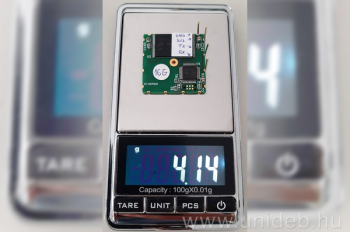
The first piece of equipment prepared by the University of Debrecen to be used in space has been completed, and it is scheduled to go into outer space at the beginning of next year. This unique instrument will measure radiation that affects technical equipment in the cosmic environment. The innovation created by DE SPACE’s Radiation Physics Research Group was presented at a workshop held in the Borsay Castle of our Mád Campus.
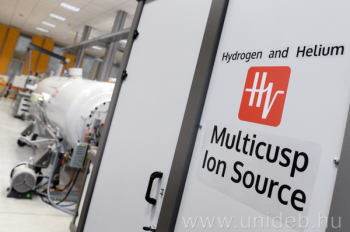
On the ESA Day held at ATOMKI on Thursday, European Space Agency (ESA) staff members could take a look at the relevant instrument park of the University of Debrecen and the Nuclear Research Institute of Eötvös Loránd Kutatási Hálózat [Eötvös Loránd Research Network] as well as learn about the investigations related to space research conducted here. Hungary’s Ministerial Commissioner for Space Research Ms. Orsolya Ferencz also participated in the event.