
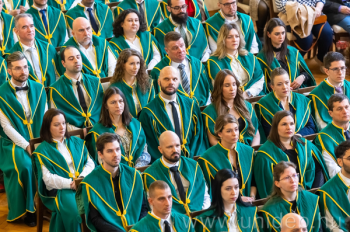
As many as 96 newly-hooded Ph.D.-s of the University of Debrecen (UD) took their oath and received their PhD degrees last Saturday. The titles habilitated doctor and the awards Count István Tisza Foundation for the University of Debrecen - University of Debrecen Publication Awards (Gróf Tisza István Debreceni Egyetemért Alapítvány (GTIDEA)–Debreceni Egyetem Publikációs Díj) were also conferred and presented at a ceremony in the venue called Aula of our Main Building.
Hírek Science címkével

The 5th Music Pedagogy Conference in Debrecen provided an opportunity for researchers, performers and teachers of music, musicology and music education to exchange ideas, learn about and discuss new research.
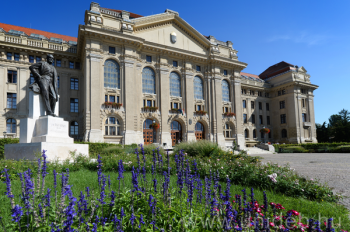
The Faculty of Agriculture, Food Science and Environmental Management and the Faculty of Science and Technology will host an international conference this year as part of the Debrecen University Symposium. The University of Debrecen (UD/DE) Scientific Council decided on the winners of the competition at its meeting last week.

Ghanem Amr Sayed, Assistant Professor at the Department of Health Informatics, Faculty of Health Sciences, DE, has investigated the impact of sociodemographic and lifestyle factors on oral hygiene in his research, which was awarded the Publication Prize of the Gróf Tisza István Foundation for the University of Debrecen. A survey of the Hungarian population found that gender, education and dental treatment also play a role in oral hygiene.
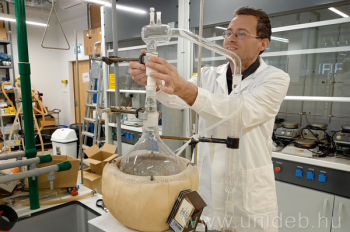
Novel drug candidate compounds, which are currently unique in the world and likely to be effective in the treatment of malaria, have been produced at the Faculty of Pharmacy of the University of Debrecen. The outstanding achievement of the researchers involved has been recognized by a publication award by Gróf Tisza István Debreceni Egyetemért Alapítvány [Count István Tisza Foundation for the University of Debrecen].
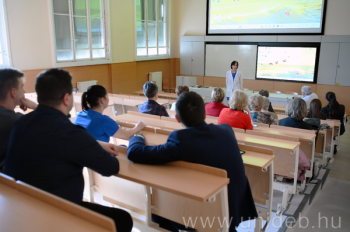
In Hungary, around 10,000 new cases of lung cancer are diagnosed every year and around nine thousand people die from the disease, even though there is a good chance of curing lung cancer if it is detected at an early stage. The latest research findings and state-of-the-art treatment options for lung cancer were discussed at a professional symposium held on Monday at the Pulmonology Clinic of the University of Debrecen Clinical Centre in connection with World Cancer Day.
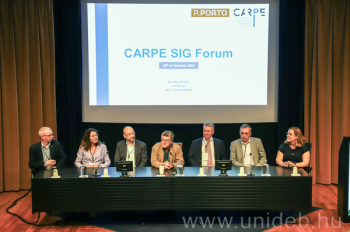
The governing body of the Consortium on Applied Research and Professional Education (CARPE) met in Porto. The University of Debrecen was represented at the event by László Csernoch, Vice-Rector for Research and Zsolt Varga, Scientific Director.

This year's Gerontology Days 2024 International Scientific Conference, which took place between 10-11 October 2024 at the University of Debrecen's Faculty of Health Sciences campus in Nyíregyháza, was concluded with outstanding professional interest. The two-day event aimed to raise awareness of the latest research innovations and best practices related to the quality of life, health and social inclusion of older people. The conference brought together experts, researchers, health and social care professionals and policy makers to discuss current challenges and solutions for the care of older people.
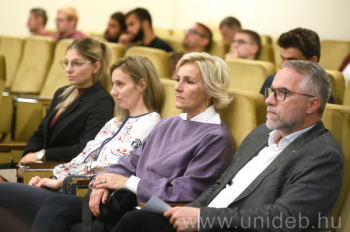
The necessity of biodiversity monitoring, modern data collection methods, the socio-economic use of information obtained through monitoring, the launch of the environmental monitoring system of the University of Debrecen and the current phases of the work were also discussed at the 1st Biodiversity Conference.
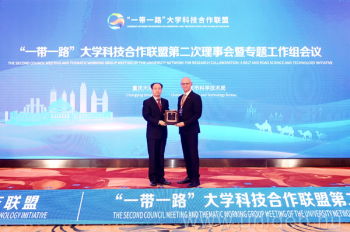
The University of Debrecen is the only Hungarian institution of higher education that has become a member of a partner university network of the Belt and Road Initiative (BRI), called University Network for Research Collaboration. This year's presidential forum and conference of this network, which brought together 15 institutions from 11 countries worldwide with the aim to promote sustainable development globally, was held in Chongqing, where Vice Rector Károly Pető officially received a membership plaque.